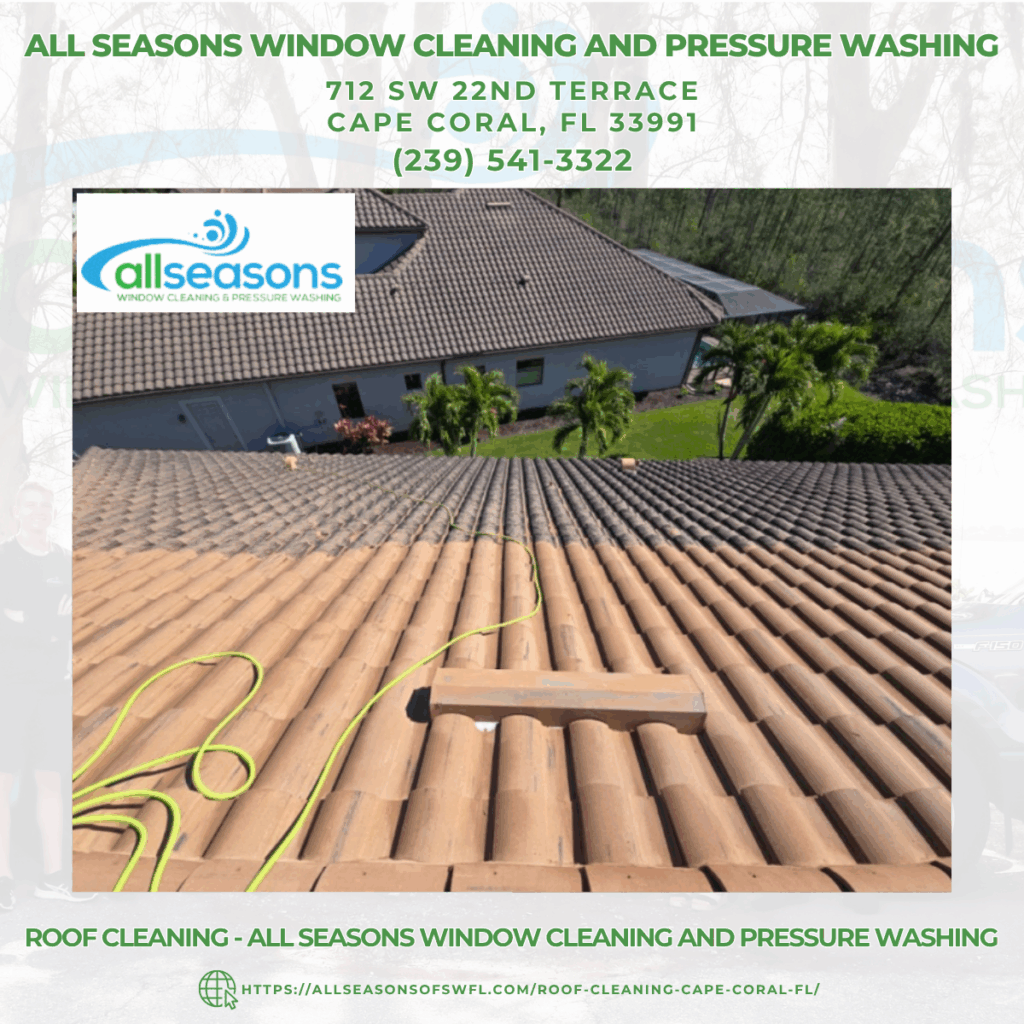
Roof Cleaning - All Seasons Window Cleaning and Pressure Washing
Cape Coral homeowners take pride in their properties, but one aspect of home maintenance that often gets overlooked is the roof. When was the last time you really looked at your roof? If it’s been a while, you might be surprised to find dark streaks, green patches, or other discoloration that’s been gradually developing. These aren’t just harmless stains—they’re signs of biological growth that can seriously impact your home’s value, appearance, and structural integrity. Understanding the importance of professional roof cleaning is the first step toward protecting one of your biggest investments.
The Science Behind Roof Stains in Southwest Florida
Florida’s climate is a double-edged sword. While we enjoy sunshine and warm weather year-round, these conditions also create a paradise for microorganisms that damage roofs. The dark streaks you see on roofs throughout Cape Coral neighborhoods are typically caused by Gloeocapsa magma, a type of cyanobacteria that feeds on the limestone filler in asphalt shingles.
This organism doesn’t just appear overnight. It spreads through airborne spores that land on your roof and find the moisture, warmth, and nutrients they need to flourish. Once established, these bacteria colonies multiply rapidly, spreading across your roof in visible black or dark brown streaks. The bacteria’s dark pigmentation serves a purpose—it protects them from UV rays—but it also absorbs heat, which affects your home’s energy efficiency.
Moss and lichen present different challenges entirely. Moss typically appears as thick, green, cushion-like patches that retain moisture against your roof surface. Its root system can work its way under shingles, gradually lifting them and creating gaps where water can penetrate. Lichen, which looks crusty and can appear in various colors from gray to orange, bonds extremely firmly to roofing materials and can be particularly stubborn to remove.
Why Pressure Washing Isn’t the Answer
When homeowners first notice roof stains, the instinct is often to grab a pressure washer and blast them away. This approach, while tempting, is one of the worst things you can do to your roof. High-pressure water can cause immediate and long-term damage in several ways.
Asphalt shingles have protective granules embedded in their surface. These granules shield the underlying asphalt from UV rays and provide the shingle’s fire resistance rating. Pressure washing can strip away these essential granules, dramatically reducing the shingle’s lifespan and voiding manufacturer warranties. Even if the damage isn’t immediately visible, you’ve compromised your roof’s integrity.
Tile roofs face different risks. The force of high-pressure water can crack tiles, especially older ones that have become more brittle over time. Even if tiles don’t crack immediately, pressure washing can force water underneath them, leading to moisture problems in the underlayment and roof decking. Metal roofs can suffer scratching, denting, and damage to protective coatings.
Soft washing solves these problems by using low-pressure water delivery systems combined with specialized cleaning solutions. The chemical solutions do the heavy lifting, breaking down and killing the organisms causing stains, while the low-pressure rinse simply removes the dead matter. This approach is as effective as pressure washing for cleaning but preserves your roof’s integrity and protective features.
The Financial Benefits of Regular Roof Maintenance
Let’s talk about money. Professional roof cleaning might seem like an unnecessary expense until you understand the financial benefits it provides. First, consider property value. Curb appeal matters tremendously in real estate, and your roof is one of the most visible features of your home. A stained, algae-covered roof screams “neglected property” to potential buyers and can reduce your home’s value by thousands of dollars.
Real estate professionals consistently report that homes with clean, well-maintained roofs sell faster and for higher prices than comparable homes with stained roofs. In Cape Coral’s competitive real estate market, this advantage can be significant. Even if you’re not planning to sell, maintaining your property’s value through regular maintenance is simply smart financial planning.
Energy costs represent another area where roof cleaning pays dividends. Dark algae stains can raise your roof’s surface temperature significantly, with some studies showing temperature increases of ten to fifteen degrees Fahrenheit on heavily stained roofs. This heat transfers to your attic and eventually into your living space, forcing your air conditioning system to work overtime. Over a hot Cape Coral summer, the increased energy costs can be substantial.
Perhaps most importantly, regular maintenance extends your roof’s functional lifespan. A typical asphalt shingle roof should last twenty to twenty-five years, but algae and moss growth can reduce this by several years. When you consider that roof replacement costs run from fifteen thousand to thirty thousand dollars or more in Cape Coral, investing in periodic cleaning that extends your roof’s life by even a few years represents tremendous value.
Understanding Different Roof Types and Their Cleaning Needs
Cape Coral homes feature a variety of roofing materials, each with specific cleaning requirements. Asphalt shingles are the most common and generally the most vulnerable to algae growth due to their limestone content. These roofs benefit greatly from soft washing with algaecidal solutions that kill bacteria without damaging the shingles or stripping protective granules.
Tile roofs, whether barrel tile or flat tile, are extremely popular in Cape Coral’s Mediterranean and Spanish-style homes. While tile itself is relatively resistant to biological growth, the spaces between tiles and any organic debris that accumulates can harbor moss and algae. Cleaning tile roofs requires extra care because tiles can be fragile, and walking on them improperly can cause cracks. Professional cleaners understand how to navigate tile roofs safely while achieving thorough cleaning.
Metal roofs have gained popularity in Florida due to their durability and energy efficiency. While metal doesn’t provide the same food source for algae as asphalt shingles, these roofs can still develop stains, especially if organic debris accumulates. Metal roof cleaning requires pH-balanced solutions that won’t damage protective coatings or cause corrosion.
Flat or low-slope roofs, common on commercial buildings and some modern residential designs, present unique challenges. These roofs often have specialized membrane systems that require gentle cleaning methods. Standing water in low spots can create algae and mold problems, making drainage assessment and cleaning particularly important.
The Soft Wash Process Explained
Understanding what happens during professional roof cleaning helps homeowners appreciate the value they’re receiving. The process begins with a comprehensive inspection. Technicians examine your roof from ground level and, when necessary, from the roof surface itself to identify stain types, assess overall condition, and spot any existing damage that needs attention.
Before cleaning begins, the surrounding area is prepared. Landscaping plants are pre-wetted and may be covered with protective tarps to prevent any contact with cleaning solutions. Downspouts are often redirected to prevent concentrated solution from affecting specific plants. Windows and doors are checked to ensure they’re closed, and homeowners are advised to keep pets and children inside during the service.
The cleaning solution is then applied to the roof surface using low-pressure sprayers. The specific formulation depends on the roof type and the organisms present, but all quality solutions share common features: they’re biodegradable, they kill organisms at the root rather than just cleaning the surface, and they’re applied at concentrations proven effective for Florida’s climate.
The dwell time—the period the solution sits on the roof before rinsing—is crucial. This allows the chemicals to penetrate growth, kill organisms, and break down stains. Rushing this step reduces effectiveness. After adequate dwell time, the roof is gently rinsed with low-pressure water, revealing the clean surface. Some stains may continue to fade over the following weeks as dead organisms decompose and wash away with rainfall.
Commercial Applications and Benefits
While most of this discussion focuses on residential properties, commercial building owners in Cape Coral shouldn’t overlook their roofs either. Commercial properties often have flat or low-slope roofs that are even more susceptible to moisture-related problems than pitched residential roofs. Regular maintenance through professional cleaning protects the substantial investment commercial roofs represent.
For retail businesses, office buildings, and restaurants, appearance matters to customers and clients. A stained roof creates an impression of neglect that can affect customer perception and, ultimately, business success. Property managers and building owners should include roof cleaning in their regular maintenance schedules, typically annually for commercial properties in our climate.
Warehouses and industrial buildings benefit from roof maintenance too, even if aesthetics are less critical. Biological growth can accelerate deterioration of roofing materials, leading to leaks that threaten inventory, equipment, and operations. Preventative maintenance through regular cleaning is far less expensive than emergency repairs or premature roof replacement.
Common Questions About Roof Cleaning Services
Homeowners considering professional roof cleaning often have similar questions. Here are answers to the most common concerns:
Will cleaning damage my shingles? When performed properly using soft wash methods, roof cleaning is completely safe for shingles and actually extends their lifespan by removing damaging organisms. Pressure washing can cause damage, which is why professional services avoid high-pressure methods.
How long will results last? In Cape Coral’s climate, professional cleaning typically keeps roofs looking good for two to three years. Factors like tree coverage, roof orientation, and humidity levels affect longevity. Some services offer preventative treatments that can extend clean appearance even longer.
Are the chemicals safe? Reputable companies use biodegradable solutions specifically formulated for roof cleaning. When applied properly with appropriate precautions, these solutions are safe for landscaping, pets, and people. They break down naturally and don’t leave harmful residues.
Can’t I just do this myself? While DIY roof cleaning is possible, it involves risks. Working on roofs is inherently dangerous without proper equipment and training. Using incorrect chemicals or methods can damage your roof or void warranties. Professional services provide expertise, insurance, and peace of mind.
Making Roof Cleaning Part of Your Home Care Routine
Your Cape Coral home requires regular maintenance to protect its value and keep it in optimal condition. Roof cleaning should be part of this routine, not an afterthought. By scheduling professional service every two to three years—or more frequently if you notice growth returning—you prevent small problems from becoming expensive repairs.
Think of roof cleaning as an investment rather than an expense. The relatively modest cost of periodic maintenance pales in comparison to the expense of premature roof replacement, potential interior damage from leaks, or the loss of property value from neglected appearance. It’s preventative care that protects one of your home’s most critical components.
Don’t wait until stains become severe or neighbors start commenting on your roof’s appearance. Take proactive steps to maintain your property and protect your investment. Professional roof cleaning delivers results that enhance your home’s beauty, extend your roof’s life, and provide peace of mind that comes from knowing your home is properly maintained.
