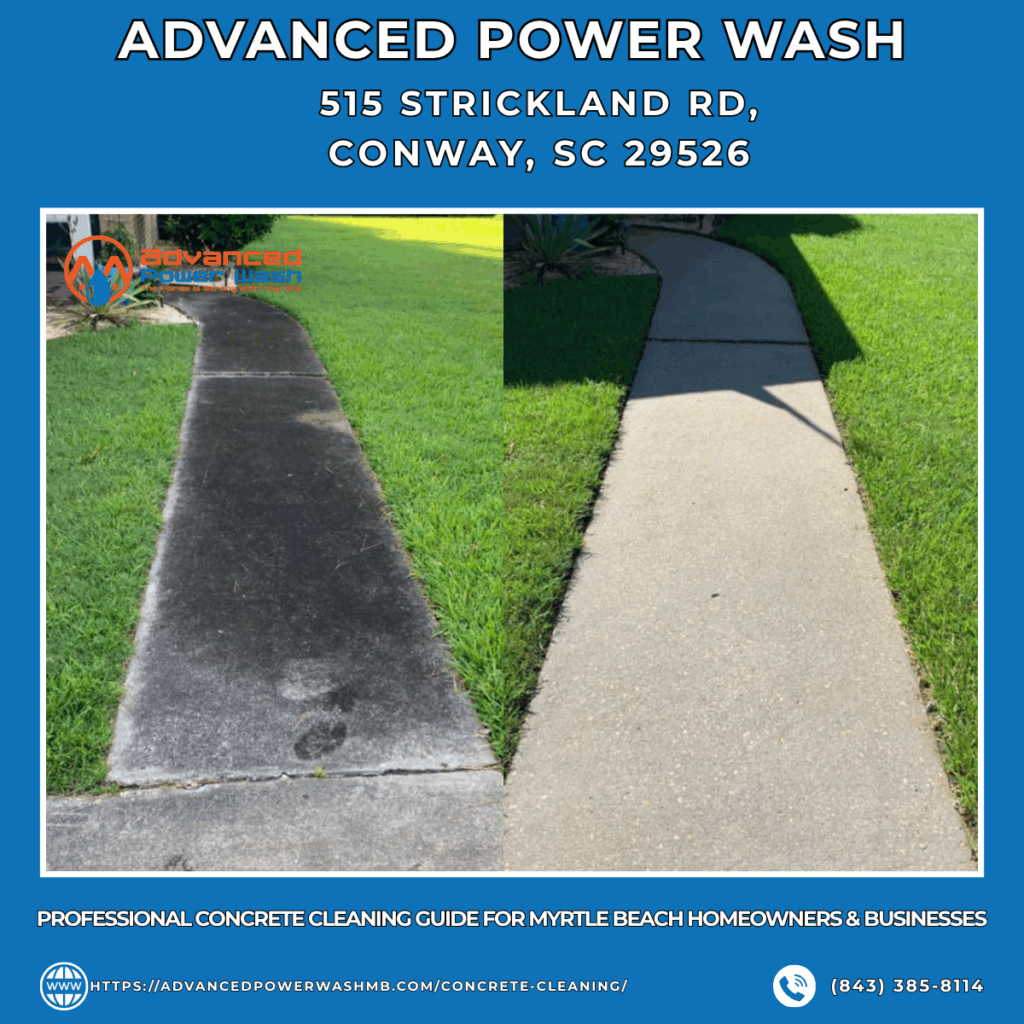
Professional Concrete Cleaning Guide for Myrtle Beach Homeowners & Businesses
Understanding Dirty Concrete in Myrtle Beach
Myrtle Beach’s stunning coastal location brings with it specific maintenance challenges that homeowners and business owners must address to keep concrete surfaces looking their best. The perpetually humid atmosphere combined with salt-laden ocean breezes creates an environment where concrete surfaces rapidly accumulate dirt, develop green algae growth, and become breeding grounds for black mold and mildew. These conditions prove far more aggressive than what inland South Carolina properties experience.
The sandy soil characteristic of beach communities constantly migrates onto driveways and patios, grinding into concrete surfaces and creating a permanent film that dulls the appearance. Local vegetation drops organic matter that decomposes on concrete, feeding microbial growth while staining surfaces with tannins. Additionally, Myrtle Beach’s iron-rich water supply leaves reddish-orange rust stains, particularly around irrigation systems and outdoor faucets. Understanding these environmental factors specific to the Grand Strand helps property owners develop effective cleaning strategies tailored to local conditions rather than relying on generic advice that may not address regional challenges.
Tools and Materials Needed to Clean Concrete
Properly equipped cleaning projects yield dramatically better results than attempting to work with inadequate tools. For Myrtle Beach concrete cleaning, invest in or rent a gas-powered pressure washer capable of producing at least 3000 PSI, as electric models often lack sufficient power for heavily soiled surfaces. Surface cleaning attachments prove invaluable for driveways and large patios, providing even cleaning without streaks while working four times faster than wand-only methods.
Essential supplies include multiple brush types—stiff nylon brushes for general scrubbing and wire brushes reserved for extreme rust or concrete-only areas away from decorative finishes. Stock safety equipment including chemical-resistant gloves that extend past your wrists, wraparound safety glasses protecting from splashback, and rubber boots with good traction. A standard garden sprayer facilitates even application of cleaning solutions across large areas.
For cleaning agents suitable for Myrtle Beach’s ecosystem, select products thoughtfully. Commercial concrete cleaners designed for algae and mold removal deliver consistent results, while eco-friendly alternatives based on hydrogen peroxide or citrus extracts protect surrounding plant life. Concrete degreasers handle oil stains, and specialized rust removers containing phosphoric or oxalic acid tackle iron deposits. Given South Carolina’s environmental regulations protecting coastal waters, prioritize biodegradable formulations that break down naturally without harming marine ecosystems downstream from your property.
Step-by-Step Concrete Cleaning Process
Pre-Cleaning Preparation
Effective concrete cleaning begins long before activating the pressure washer. Start by clearing the entire concrete surface of furniture, grills, potted plants, and any decorative items that might obstruct cleaning or become damaged. Using a leaf blower or heavy-duty broom, remove all loose debris including the ever-present Myrtle Beach sand, pine straw, leaves, and accumulated dirt that washing alone won’t adequately address.
Inspect the concrete carefully for structural issues—cracks wider than a quarter-inch, sections that have settled unevenly, or areas where the surface layer is flaking away. Addressing these problems before aggressive cleaning prevents worsening damage. Wet down all surrounding landscaping thoroughly, creating a moisture barrier that helps prevent chemical absorption by plant roots. Cover delicate flowers or shrubs with plastic sheeting, securing edges with rocks or bricks to prevent wind displacement during the cleaning process.
Choosing the Right Cleaning Solution
Selecting cleaning solutions appropriate for your specific staining conditions determines success or frustration. For general dirt, grime, and light organic growth typical of well-maintained Myrtle Beach properties, a solution of oxygen bleach provides effective, environmentally responsible cleaning. Mix according to package directions, typically one pound of powder per two gallons of warm water.
When confronting serious mold, mildew, or algae growth that has established itself over months or years, commercial cleaners formulated with sodium hypochlorite or sodium hydroxide deliver the killing power necessary to eliminate growth at its source. These stronger formulations require careful handling and thorough rinsing but provide results that gentler products cannot match on severely compromised surfaces.
Oil-stained driveways demand specialized degreasers that break down petroleum-based compounds. Look for alkaline cleaners specifically rated for concrete that can penetrate porous surfaces where oil has soaked in. For rust stains common around Myrtle Beach properties with well water, dedicated rust removers containing chelating agents pull iron particles from concrete without the bleaching effect that damages colored or decorative finishes.
Pressure Washing and Manual Scrubbing
Beginning the actual cleaning process requires systematic approach and patience for optimal results. Apply your chosen cleaning solution evenly across the concrete surface, working in manageable sections rather than attempting to treat everything simultaneously. Allow the solution appropriate dwell time—typically 10-20 minutes depending on product recommendations and stain severity—giving chemicals time to break down contaminants and kill organic growth.
Start pressure washing at one corner, working backward so you never walk across already-cleaned areas. Hold the wand at a consistent distance from the surface, generally 12-18 inches, adjusting based on concrete age and condition. Older concrete requires gentler pressure and greater distance to avoid surface damage. Overlap each pass by several inches ensuring no stripes or missed spots remain. For Myrtle Beach’s stubborn algae stains that resist pressure washing alone, pause to manually scrub problem areas with stiff brushes before continuing with the pressure washer.
The rotating surface cleaner attachment transforms driveway and large patio cleaning from an all-day ordeal into a manageable project. These tools maintain consistent pressure and distance while covering ground quickly, and their splash guards contain water that would otherwise spray everywhere. For edges, corners, and detailed areas where surface cleaners cannot reach, switch back to the wand with appropriate nozzle selection.
Rinsing and Final Touches
After completing pressure washing, thorough rinsing removes all chemical residues that could damage concrete or surrounding areas over time. Switch to a wider spray pattern and systematically rinse the entire surface, paying extra attention to areas where cleaning solution pooled or where visible suds remain. Direct rinse water toward appropriate drainage rather than allowing it to flow onto landscaping or into storm drains where possible.
Myrtle Beach’s humidity means concrete stays damp longer than in arid climates. Allow at least 24 hours of drying time before walking on cleaned surfaces, and 48-72 hours before replacing furniture or applying sealers. Once fully dry, inspect your work under good lighting conditions. Minor stains missed during initial cleaning can be spot-treated without repeating the entire process, while documentation of remaining issues helps when deciding whether professional intervention is needed for problem areas.
Removing Tough Stains from Concrete
Oil and Grease Stains
Vehicle fluids create some of the most stubborn stains on Myrtle Beach driveways and garage floors. Fresh oil spills require immediate action—blot excess oil with paper towels, then cover the stain completely with absorbent material like clay-based cat litter, sawdust, or commercial oil absorbent products. Leave the absorbent material overnight, allowing it to draw oil from the concrete before sweeping away.
For older, set-in oil stains, aggressive treatment becomes necessary. Apply a commercial concrete degreaser formulated for petroleum products, scrubbing vigorously with a wire brush to work the chemical deep into concrete pores where oil has penetrated. The poultice technique—mixing an absorbent powder with a solvent to create a paste applied thick over the stain and covered with plastic—draws embedded oil to the surface as it dries. This process may require multiple applications for stains that have aged for months or years, but persistence yields results where other methods fail.
Algae, Mold, and Mildew Removal
Perhaps no concrete maintenance challenge proves more persistent in Myrtle Beach than the constant battle against biological growth. The combination of moisture, warmth, and organic matter creates ideal conditions for algae to establish green or black colonies that not only look terrible but become dangerously slippery when wet. Mold and mildew follow similar patterns, thriving in shaded areas that never fully dry between rain events.
Effective concrete cleaning for biological growth requires products that kill organisms rather than simply removing surface discoloration. Cleaners containing sodium hypochlorite penetrate growth colonies, destroying cellular structure and preventing rapid regrowth. Apply these solutions generously to affected areas, allowing sufficient contact time—often 15-30 minutes for established growth—before agitating with brushes and pressure washing.
For property owners concerned about chemical use near landscaping or coastal waterways, hydrogen peroxide-based cleaners offer an effective alternative. While requiring longer contact time and potentially repeated applications compared to chlorine bleach products, hydrogen peroxide breaks down into water and oxygen, leaving no harmful residues. Regardless of product choice, addressing concrete cleaning for biological growth promptly prevents it from becoming a permanent feature requiring professional restoration.
Rust and Other Common Stains
Iron-based rust stains manifest as orange or reddish-brown discoloration that seems to permeate concrete rather than sitting on the surface. These stains come from metal furniture legs, rusty nails, well water sprinklers, or oxidizing rebar in older concrete. Standard cleaning methods prove ineffective against rust, which requires chelating agents or acids to break the chemical bonds holding iron particles in concrete.
Oxalic acid-based rust removers work remarkably well on concrete, though they require careful application following safety precautions. Apply the product directly to rust stains, allow it to work for the specified time, then scrub and rinse thoroughly. For widespread rust staining, consider professional treatment to avoid the risks associated with handling acidic chemicals over large areas.
Fertilizer stains create another common problem, particularly on driveways where lawn care products spill or where sprinkler overspray deposits nutrients onto concrete. These stains often appear as white or tan discoloration resistant to normal cleaning. Acidic cleaners designed for concrete can remove fertilizer deposits, though prevention through immediate rinsing of spills proves far easier than stain removal after the fact.
Concrete Cleaning Safety for Myrtle Beach Residents
Chemical safety takes on heightened importance in Myrtle Beach’s warm, humid conditions that accelerate chemical reactions and increase vapor concentration. Before beginning any concrete cleaning project, read all product labels thoroughly and prepare appropriate protective equipment. Chemical-resistant gloves protect hands from direct contact, while safety goggles with side shields prevent splashback from reaching eyes—a particular concern when pressure washing which aerosolizes cleaning solutions.
Respiratory protection becomes essential when working with strong chemicals in enclosed areas like garage floors or covered patios where ventilation is limited. Humidity causes chemical vapors to linger rather than dissipate quickly, increasing inhalation risks. Disposable N95 respirators provide minimum protection, while reusable respirators with chemical cartridges offer superior filtration for extensive projects or when using particularly harsh products.
The coastal environment demands special attention to chemical runoff and environmental impact. Myrtle Beach’s proximity to the Atlantic Ocean and numerous tidal waterways means chemicals improperly disposed of can rapidly reach sensitive marine ecosystems. Create physical barriers using sand berms or rolled towels along driveway edges to contain rinse water, directing it toward grassy areas that filter contaminants rather than allowing direct flow into storm drains. This practice not only protects the environment but helps homeowners comply with South Carolina’s increasingly strict water quality regulations.
Preventing Future Stains on Concrete
After restoring concrete to clean condition through intensive effort, implementing preventive measures protects your investment and extends time between major cleaning sessions. Concrete sealers form protective barriers that repel water, prevent stain penetration, and inhibit organic growth. For Myrtle Beach’s climate, breathable penetrating sealers prove most effective, allowing water vapor to escape from below while blocking liquid water and contaminants from entering the surface.
Application timing matters significantly in coastal South Carolina. Apply sealers during dry periods when humidity levels drop below 60% if possible, and when no rain is forecast for at least 48 hours. This typically means spring and fall application windows, as summer’s daily afternoon thunderstorms and high humidity create unfavorable conditions. Surface temperature should be between 50-90°F during application, avoiding the extremes of winter cold and summer heat that affect curing.
Maintenance routines prevent small problems from becoming major cleaning projects. Weekly sweeping removes abrasive sand and prevents organic matter from decomposing on the surface. Monthly rinsing with a garden hose washes away surface dirt before it becomes embedded, and quarterly light cleaning with mild detergent maintains appearance between annual or biannual deep cleaning sessions. For areas prone to specific issues like oil stains on driveways or mold on north-facing patios, targeted monthly spot treatment prevents buildup requiring aggressive intervention.
Professional Concrete Cleaning Services in Myrtle Beach, SC
Despite the availability of rental equipment and numerous cleaning products, certain situations exceed DIY capabilities or make professional services the practical choice. Extremely dirty concrete that hasn’t received attention in years often features deeply embedded stains, established biological growth, and accumulated grime requiring industrial equipment and commercial-grade chemicals homeowners cannot access. Large commercial properties, apartment complexes, or extensive residential concrete expanses exceed the time and physical effort most people can reasonably invest.
Professional concrete cleaning companies serving Myrtle Beach bring specialized knowledge of local conditions, understanding which techniques work best against Grand Strand-specific challenges. They utilize hot water pressure washers that clean more effectively than cold water units, employ surface cleaners that complete large areas quickly and evenly, and have access to professional-strength chemicals unavailable to consumers. Perhaps most importantly, professionals carry liability insurance protecting your property should accidents occur during cleaning.
When researching local concrete cleaning services, prioritize companies with established Myrtle Beach presence and verifiable references from area properties. Request detailed written estimates that specify square footage pricing, cleaning methods, products to be used, and timeline for completion. Compare multiple quotes but recognize that unusually low pricing often indicates inexperienced operators or corner-cutting that delivers substandard results. Professional services should provide satisfaction guarantees and commit to returning for touch-ups if initial results don’t meet reasonable expectations.
Cost to Clean Very Dirty Concrete in Myrtle Beach
Budget planning for concrete cleaning requires understanding both DIY costs and professional service pricing. Do-it-yourself projects involve equipment rental as the primary expense—commercial-grade pressure washers rent for $80-150 per day at local tool rental centers, while surface cleaning attachments add another $25-50 daily. Purchasing a homeowner pressure washer costs $250-600 for quality units adequate for residential use, though these lack the power of commercial equipment.
Cleaning solution expenses vary widely based on concrete condition and stain types. Basic cleaning of moderately dirty surfaces might require only $20-40 in supplies, while severely stained concrete needing specialty degreasers, rust removers, and anti-fungal treatments can easily exceed $100 for chemicals alone. Add safety equipment, brushes, and miscellaneous supplies for another $50-100 if you’re starting from scratch.
Professional concrete cleaning in Myrtle Beach typically ranges from $0.15-0.40 per square foot depending on condition, accessibility, and services included. A standard residential driveway of 500-700 square feet costs $100-280 for basic cleaning, while adding stain treatment, anti-fungal application, and sealing can push costs to $300-500. Commercial properties often receive volume discounts, with pricing dropping to $0.10-0.25 per square foot for projects exceeding 5,000 square feet. Extremely dirty concrete requiring significant pre-treatment and multiple cleaning passes commands premium pricing at the higher end of these ranges.
FAQ—Cleaning Dirty Concrete in Myrtle Beach, SC
What’s the best product to remove mold from concrete in Myrtle Beach?
For Myrtle Beach’s persistent mold problems, products containing sodium hypochlorite at 6-12% concentration provide the most reliable results. Professional-grade mold removers specifically formulated for concrete offer superior performance compared to household bleach. Oxygen bleach products work effectively while being gentler on surrounding vegetation, though they require longer contact time and may need repeated applications for heavy growth.
How often should concrete be cleaned in SC’s coastal climate?
Myrtle Beach properties benefit from deep cleaning every 4-6 months to stay ahead of algae and mold growth, with monthly light maintenance between deep cleans. High-traffic areas like driveways can extend to annual deep cleaning if maintained regularly, while shaded patios receiving little sunlight may need quarterly attention. Monitor surfaces for green discoloration or slippery texture indicating it’s time to clean regardless of schedule.
Can I use bleach or vinegar to clean dirty concrete here?
Household bleach (sodium hypochlorite) effectively kills mold and algae when diluted to 1:3 ratio with water for standard applications. Avoid bleach on colored, stained, or stamped concrete as it may cause discoloration. White vinegar’s mild acidity handles light cleaning and mineral deposits but lacks strength for severe Myrtle Beach mold problems. Neither product should mix with other cleaners, and both require complete rinsing to prevent plant damage.
Is pressure washing safe for older concrete in Myrtle Beach?
Concrete older than 15-20 years requires gentler pressure washing techniques to prevent surface damage. Reduce pressure to 2000 PSI or lower, increase nozzle distance to 18-24 inches, and test in inconspicuous areas first. Older concrete showing scaling, spalling, or surface deterioration may need professional evaluation before pressure washing, as aggressive cleaning can accelerate existing damage. Consider chemical cleaning with minimal pressure for fragile older surfaces.
Are there local regulations for concrete cleaning chemicals?
Myrtle Beach and Horry County enforce South Carolina’s stormwater regulations prohibiting discharge of harmful chemicals into storm drains. Property owners must prevent wash water containing cleaning chemicals from entering storm drainage systems that discharge directly to waterways without treatment. Use biodegradable products when possible, contain runoff using barriers, and direct rinse water toward vegetated areas that provide natural filtration. Commercial operations may require permits for significant cleaning projects.
Conclusion: Achieving Lasting Results for Clean Concrete in Myrtle Beach
Successfully cleaning very dirty concrete in Myrtle Beach demands understanding the unique environmental challenges coastal South Carolina presents and applying appropriate techniques that address local conditions. From selecting the right equipment and cleaning solutions to executing proper pressure washing techniques and tackling specific stain types, each step builds toward results that restore concrete surfaces to their original beauty while preparing them to withstand future exposure to humid, coastal conditions.
The difference between temporary improvement and lasting results lies in preventive maintenance and protective treatments applied after cleaning. Regular light maintenance prevents dirt and organic growth from accumulating to levels requiring intensive intervention, while quality sealers create barriers that extend the time between deep cleaning sessions. These practices not only keep concrete looking better but also protect the surface itself from the degradation that humid, salty air accelerates in Myrtle Beach’s environment.
Whether tackling the project independently or engaging professional concrete cleaning services, clean concrete dramatically enhances property appearance, improves safety by eliminating slippery algae and mold, and protects your investment by preventing permanent damage from embedded contaminants. The effort invested in proper concrete maintenance pays dividends through extended surface life, reduced long-term repair costs, and the pride of ownership that comes with well-maintained property. For severely compromised concrete beyond DIY capabilities, don’t hesitate to contact experienced local professionals who understand Myrtle Beach’s specific challenges and have the expertise to deliver exceptional results that withstand the coastal environment’s demands.
