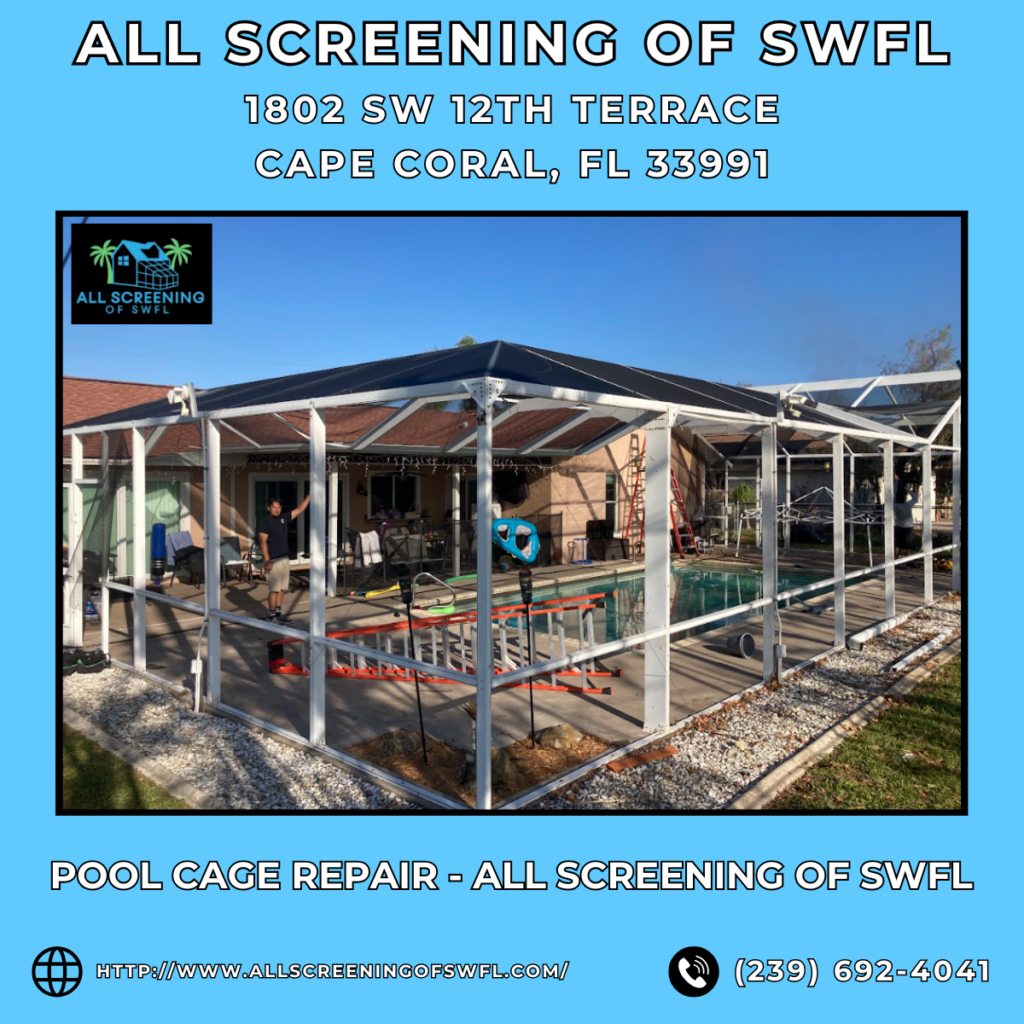
Pool Cage Repair - All Screening of SWFL
Understanding Pool Cage Damage in Cape Coral
Pool enclosures throughout Cape Coral face relentless challenges from the region’s subtropical climate and proximity to saltwater. The combination of intense ultraviolet radiation, high humidity, salt-laden air, and seasonal storms creates a perfect storm for pool cage deterioration. Homeowners frequently encounter torn screening from wind-blown debris, corroded aluminum components from salt exposure, faded or brittle screening material, and loose structural connections that compromise stability.
The pool cage repair Cape Coral market has grown substantially as residents recognize that these structures require specialized attention beyond basic home maintenance. Unlike inland communities, Cape Coral properties experience accelerated degradation of outdoor metal structures due to constant salt air exposure. This coastal effect means that pool cages here may show significant wear within 10-15 years, whereas similar structures in non-coastal areas might last decades with minimal intervention.
Understanding the specific vulnerabilities of pool enclosures in this environment helps homeowners identify problems early. Discoloration in screening often indicates UV damage that has compromised material integrity, while white powdery residue on aluminum frames signals oxidation that weakens structural components. Addressing these warning signs promptly through professional pool cage repair prevents escalation into more serious and expensive structural failures.
Types of Pool Cage Repairs We Perform
Screen Rescreening and Patch Repairs
Screen damage represents the most visible and common pool cage problem in Southwest Florida. Our pool screen rescreening Cape Coral services address everything from isolated tears to complete screen failure across multiple panels. Small punctures from branches, bird strikes, or errant golf balls can often be patched economically, but widespread screening issues require full panel replacement for optimal results.
The rescreening process demands precision and experience to achieve professional results. Our technicians remove old screening carefully to avoid frame damage, select appropriate replacement materials for local conditions, install new screening with proper tension throughout, and secure it with durable spline that resists weathering. We stock various screening options including traditional fiberglass, super screen for enhanced durability, pet-resistant screening for animal owners, and tinted options for improved shade and privacy.
Aluminum Frame Restoration
While screening gets replaced periodically, the aluminum framework should last decades with proper care and timely intervention. Our pool cage frame repair Cape Coral expertise encompasses everything from minor cosmetic restoration to major structural reinforcement. Salt air causes aluminum oxidation that appears as white chalky residue, which not only looks unsightly but actually weakens the metal over time.
Frame repair services include removing oxidation through specialized cleaning, straightening bent members using hydraulic tools, replacing corroded sections with matching aluminum, reinforcing connections with additional fasteners, and applying protective coatings that resist future corrosion. For severely damaged frames, we assess whether targeted repairs suffice or if complete member replacement provides better long-term value. This honest evaluation helps homeowners make cost-effective decisions about their pool cage investment.
Hurricane and Storm Damage Recovery Cape Coral
Post-Storm Assessments
Southwest Florida’s position makes it vulnerable to tropical storms and hurricanes that can devastate pool enclosures. Even Category 1 storms generate winds strong enough to tear screening and bend aluminum frames, while major hurricanes can completely destroy these structures. Our post-storm pool cage repair assessment service provides crucial documentation for insurance claims while identifying all damage requiring attention.
Comprehensive storm assessments examine structural integrity of all frame members, screen condition across all panels, door and hardware functionality, roof panel alignment and security, and foundation connections that anchor the structure. We photograph all damage and provide detailed written reports that satisfy insurance requirements while giving homeowners clear repair recommendations. Many insurance policies cover storm damage to pool cages, making prompt professional assessment essential for maximizing coverage.
Beyond immediate visible damage, storms often create hidden problems that emerge later. Shifted frames may appear intact but have compromised connections, while screens that survived the storm may have stretched beyond proper tension. Our experienced technicians identify these subtle issues before they develop into larger problems.
Materials for Durable Pool Cages in Florida
Material selection dramatically impacts pool cage longevity in Cape Coral’s harsh environment. The pool cage materials Cape Coral professionals recommend prioritize durability and weather resistance over initial cost savings. UV-resistant screening maintains integrity despite constant sun exposure, powder-coated aluminum frames resist oxidation far better than mill-finish alternatives, marine-grade stainless steel fasteners prevent rust failures, and high-quality spline maintains screen tension through temperature fluctuations.
Modern screening technology offers significant advantages over materials used in older enclosures. Premium fiberglass screening now includes UV inhibitors that prevent brittleness, while polyester options provide exceptional tear resistance for high-traffic areas. Some homeowners opt for smaller mesh sizes that provide better insect protection, though this requires consideration of reduced airflow and visibility.
Frame materials have also evolved, with powder-coating technology providing superior corrosion protection compared to older anodized finishes. When selecting materials for pool cage repair projects, experienced contractors recommend investing in the best materials your budget allows, as the incremental cost difference pales compared to extended service life and reduced maintenance.
Pool Cage Maintenance Tips for Cape Coral Homes
Proactive maintenance substantially reduces Pool Cage Repair frequency and costs. Cape Coral’s environment demands vigilant care, with regular inspection and cleaning preventing many common problems. Establish a monthly visual inspection routine checking for small screen tears or punctures, frame discoloration or oxidation, loose fasteners or connections, debris on roof panels, and proper door operation and alignment.
Cleaning pool cages quarterly removes salt accumulation that accelerates corrosion. Use gentle detergents and soft brushes to avoid damaging screens, rinse thoroughly with fresh water to remove all cleaning solution and salt residue, and inspect closely while cleaning for emerging problems. Trim vegetation around the enclosure maintaining at least three feet of clearance, as branches cause most puncture damage during normal weather and become dangerous projectiles during storms.
Seasonal preparations make a significant difference in storm survival rates. Before hurricane season, secure or remove any items that could blow into screening, check that all fasteners are tight and connections secure, document your pool cage’s condition with photographs, and consider temporary reinforcement for particularly vulnerable areas. These simple steps minimize damage risk and simplify insurance claims if damage occurs.
Cost Guide for Pool Cage Repairs in Cape Coral
Minor vs Major Repairs
Repair costs vary considerably based on damage extent, materials selected, and enclosure size. Understanding typical pricing helps homeowners budget appropriately and recognize fair quotes. Minor repairs including individual screen patches typically cost $100-175, single panel rescreening runs $125-275 depending on size, door hardware replacement ranges $175-350, and spot frame repairs cost $250-500 for limited work.
Major Pool Cage Repair projects involve substantially higher investments. Complete enclosure rescreening costs $2,000-5,000 for average-sized pools, extensive frame repair or partial replacement runs $3,000-8,000, structural reinforcement projects cost $5,000-12,000, and complete pool cage replacement ranges $18,000-40,000 depending on size and material quality.
Several variables affect final pricing beyond basic labor and materials. Two-story enclosures require special equipment and safety measures increasing costs by 20-40%, custom colors or non-standard screening add 10-25% to material costs, difficult access situations may increase labor charges, and required permits add administrative expenses. Request detailed written estimates that itemize all costs, and compare at least three quotes to ensure competitive pricing while avoiding suspiciously low bids that may indicate inferior materials or workmanship.
Why Professional Pool Cage Repair Matters Locally
Cape Coral’s specific environmental challenges and building requirements make professional expertise essential for successful Pool Cage Repair outcomes. Licensed contractors understand Florida Building Code requirements for wind loads, maintain current knowledge of Lee County permitting processes, have established relationships with inspectors, and carry comprehensive insurance protecting homeowners from liability.
Professional installation quality far exceeds typical DIY results. Experienced technicians achieve proper screen tension that prevents sagging, create weather-tight seals that keep insects out, ensure structural soundness that meets code requirements, and select appropriate materials for local conditions. They also complete projects efficiently, typically finishing what might take homeowners weeks in just days, and provide warranties backing their work.
Beyond technical expertise, professional contractors navigate the administrative complexities of permitted work. They understand when permits are required, submit proper documentation to building departments, coordinate required inspections, and ensure compliance with homeowner association rules. This comprehensive service protects your investment while avoiding potential legal complications from unpermitted work.
