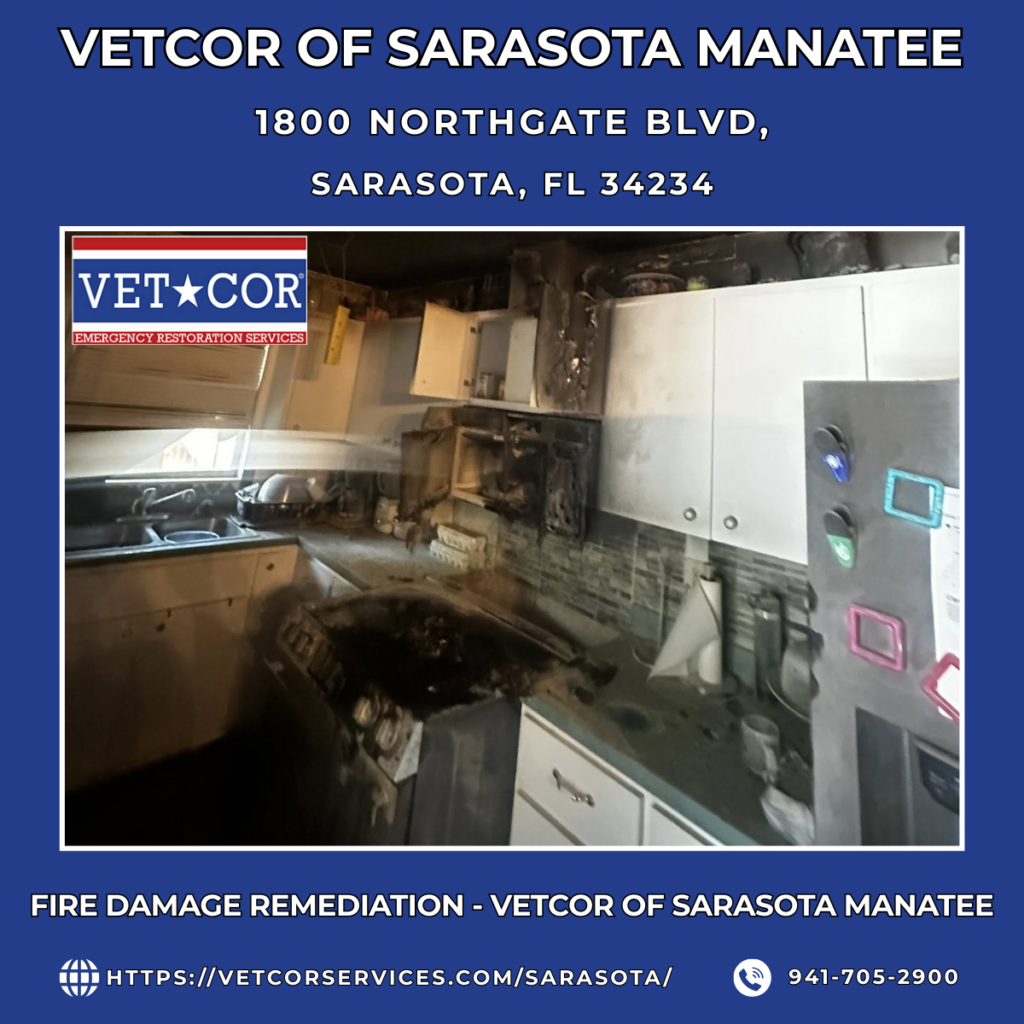
Fire Damage Remediation - VetCor of Sarasota Manatee
What Is Fire Damage Remediation?
Experiencing a fire in your Sarasota property leaves behind more than just visible damage—it creates a complex web of contamination requiring specialized expertise. Fire damage remediation represents the technical process of eliminating fire-related contaminants, addressing structural concerns, and making properties safe for occupancy. This multi-faceted service extends far beyond basic cleaning to encompass soot removal, smoke odor elimination, water extraction, and comprehensive sanitization of affected areas.
Understanding the distinction between remediation and restoration helps property owners navigate the recovery process. Fire damage cleanup and repair involves two complementary but distinct phases. Remediation focuses on removing harmful substances, cleaning contaminated surfaces, and establishing safe conditions. Restoration rebuilds damaged structures, replaces destroyed materials, and returns properties to their original state. Both processes are essential for complete fire recovery.
The comprehensive scope of remediation work addresses every fire-related issue. Professionals evaluate damage throughout the entire property, extract water from firefighting activities, remove smoke residue from all surfaces, eliminate embedded odors, dispose of irreparably damaged materials, and prepare spaces for reconstruction. In Sarasota’s subtropical environment, expedited remediation prevents additional complications like mold proliferation and accelerated corrosion.
Fire Damage Assessment and Inspection
Comprehensive fire damage assessment establishes the foundation for successful remediation. Trained specialists systematically examine your Sarasota property to catalog all fire, smoke, and water damage. This meticulous evaluation identifies obvious destruction, detects hidden damage behind walls and in concealed spaces, assesses structural stability, documents water penetration from firefighting, and highlights immediate safety concerns.
Rigorous safety protocols govern every fire inspection after a fire. Before personnel enter damaged structures, comprehensive checks verify that buildings are structurally sound, electrical hazards are identified and isolated, gas lines are secure, dangerous materials haven’t been disturbed by fire, and ventilation is adequate. These systematic safety checks prevent injuries and additional property damage during inspection and remediation.
Precision moisture mapping guides effective drying strategies. Technicians deploy moisture meters, infrared cameras, and humidity sensors to identify every area affected by firefighting water. This data-driven approach prevents overlooked moisture pockets that could spawn mold growth—a critical consideration in Sarasota where elevated humidity and temperatures create ideal conditions for microbial development within one to two days of water exposure.
Detailed scope documentation provides the roadmap for remediation and restoration. This exhaustive record includes high-resolution photographs from multiple angles, comprehensive video walkthroughs, written descriptions of all affected areas, moisture level measurements throughout the property, and itemized lists of damaged materials and contents. This documentation serves insurance claim purposes while ensuring complete and systematic remediation.
Fire Damage Remediation Process
Effective fire damage remediation follows proven protocols developed through years of industry experience. Each step in fire damage cleanup builds upon previous work, creating a logical progression from emergency response through final cleaning. Property owners benefit from understanding this systematic approach as it helps set realistic expectations for the timeline and scope of remediation work ahead.
Securing the Property and Debris Removal
Property security establishes the critical first line of defense after fire damage. Emergency board-up procedures safeguard compromised structures from additional harm. Experienced teams install heavy-duty plywood barriers over blown-out windows, reinforce damaged door frames, deploy weather-resistant tarps across roof breaches, and seal structural openings. In Sarasota, where tropical weather systems bring intense rain and wind, this immediate protection prevents exponential damage escalation.
Systematic fire debris removal clears the way for remediation work. Specialists methodically remove fire-damaged materials, sort through rubble to identify salvageable items, dispose of hazardous waste according to regulations, haul away charred structural components, and clear access for remediation equipment. Professional debris removal maintains safety standards while preserving items that can be restored.
Smoke and Soot Removal
Comprehensive smoke damage cleaning tackles the pervasive nature of fire residues. Smoke particles infiltrate every crevice, deposit acidic soot on all surfaces, and create stubborn staining. Professional soot removal services utilize diverse techniques tailored to different materials—gentle dry sponging for walls, wet cleaning solutions for hard surfaces, specialized cleaners for porous materials, and immersion methods for restorable contents.
Industrial-grade HEPA filtration maintains air quality throughout the cleaning process. These powerful systems capture microscopic soot particles, prevent contamination spread to clean areas, and continuously filter ambient air. Technicians approach cleaning methodically, starting from ceiling level and working downward, ensuring no surface escapes attention. Particular emphasis falls on hidden areas where soot accumulates unnoticed—inside ductwork, behind outlet covers, and within wall cavities.
Odor Removal and Deodorization
Eliminating fire odors requires sophisticated understanding of how smoke molecules behave. Fire odor removal goes beyond surface treatments to address odors embedded deep within building materials. Smoke odor deodorization employs scientific approaches to neutralize smell molecules rather than simply masking them with fragrances. Success depends on identifying every material harboring odor-causing compounds.
Advanced deodorization technologies work in concert to eliminate stubborn fire odors. Thermal fogging releases deodorizing particles that follow the same pathways smoke took during the fire, ozone generators oxidize odor molecules at the molecular level, hydroxyl systems provide powerful deodorization safe for occupied spaces, activated carbon filtration captures odor molecules from air, and specialized sealants encapsulate odors in materials that cannot be fully cleaned. Multiple treatment cycles often prove necessary for complete odor elimination.
Structural Cleaning and Drying
Thorough structural cleaning after fire addresses the building’s skeleton. This essential work includes deep cleaning of framing lumber, removing soot from support beams, treating wood members to prevent decay, cleaning foundation elements, and preparing all structural surfaces for new materials. Neglecting structural cleaning invites long-term problems including material degradation, poor adhesion of new finishes, and persistent contamination.
Strategic drying after fire damage prevents moisture-related complications. Commercial dehumidifiers extract humidity from air and materials, high-velocity air movers accelerate evaporation, specialized drying mats address trapped moisture in floors, and moisture monitoring equipment tracks progress. In Sarasota’s humid environment, controlled drying processes run continuously until moisture readings reach acceptable standards, typically requiring several days to over a week depending on saturation extent.
Contents Cleaning and Restoration
Professional contents cleaning fire damage services salvage precious belongings that might otherwise be lost. Experienced technicians catalog every item, evaluate restoration potential, apply appropriate cleaning methods, and track items throughout the process. Specialized techniques restore many items presumed ruined—family heirlooms, important documents, electronics, artwork, and sentimental possessions often respond remarkably well to expert restoration.
Restoring personal belongings after fire employs diverse specialized techniques. Ultrasonic cleaning uses sound waves to clean intricate items, professional dry cleaning restores fabrics and clothing, electronics specialists repair smoke-damaged devices, document restoration salvages important papers, and art conservators restore valuable pieces. Contents typically move to secure, climate-controlled facilities during property remediation, protecting them from construction activities while restoration work proceeds on the building.
Health and Safety Considerations After a Fire
Understanding fire damage health risks protects occupants from invisible dangers lurking after flames are extinguished. Toxic combustion byproducts contaminate air and surfaces, microscopic soot particles penetrate deep into lungs, chemical residues create contact hazards, and compromised structures pose collapse risks. Recognizing these hazards explains why professional remediation is essential before reoccupying fire-damaged properties.
Many property owners wonder, “Is it safe to stay in a smoke-damaged home?” The answer is unequivocally no until professional fire damage remediation confirms safety. Contaminated air harbors toxic particles and gases, soot residues contain carcinogens and irritants, damaged electrical systems present electrocution and fire risks, and weakened structures may collapse without warning. Professional remediation eliminates these dangers through systematic cleaning, testing, and structural assessment.
Strict re-entry protocols protect property owners during the remediation period. Professional guidance determines when limited access is safe, appropriate personal protective equipment is mandatory during any entry, exposure time must be minimized, family members and pets should remain away, and full occupancy awaits professional clearance. These precautions prevent health complications and ensure safety throughout the recovery process.
Fire Damage Remediation and Insurance Claims
Navigating fire damage insurance claims requires meticulous documentation and clear communication. Insurers need comprehensive evidence of damage extent, detailed restoration cost estimates, receipts for emergency services, proof of property ownership, and documentation of emergency mitigation efforts. Experienced remediation companies in Sarasota understand insurance requirements and provide documentation in formats that facilitate smooth claim processing.
Effective documenting fire damage begins immediately after the fire and continues throughout remediation. Create photographic records before any cleaning begins, maintain detailed logs of all remediation activities and associated costs, preserve receipts for emergency repairs and temporary accommodations, document every conversation with insurance representatives, and maintain chronological records of the entire process. This comprehensive documentation substantiates claims and prevents disputes over coverage.
Collaborative relationships between remediation professionals and insurance adjusters benefit all parties. Reputable companies work directly with adjusters to provide detailed damage assessments, offer transparent cost estimates, explain technical remediation requirements, supply required documentation promptly, and maintain open communication channels. This cooperation streamlines claims processing, reduces delays, and helps ensure policy holders receive fair compensation for covered losses.
Preventing Secondary Damage After a Fire
Strategic action to prevent secondary fire damage protects properties from compounding problems. Water damage from firefighting operations creates mold risks, acidic soot accelerates material corrosion, persistent odors signal ongoing chemical reactions, and exposure to elements through damaged roofs and windows causes additional deterioration. Prompt, professional remediation intercepts these destructive processes before they cause extensive additional damage.
The threat of mold after fire damage demands immediate attention in Sarasota’s climate. Omnipresent mold spores await only moisture and warmth to proliferate—conditions abundantly present after firefighting efforts in Florida properties. Without rapid drying and dehumidification within 24-48 hours, mold colonies establish themselves in wet materials, creating health hazards and requiring expensive remediation. Professional drying equipment and monitoring prevent this entirely avoidable secondary damage.
Soot-induced corrosion silently destroys building materials and systems if left unaddressed. Acidic compounds in smoke residue chemically attack metals, concrete, and other materials, causing pipes to corrode and leak, electrical components to malfunction, structural fasteners to weaken, and surfaces to deteriorate. Swift, professional soot removal stops this chemical attack, preserving structural integrity and preventing failures that could emerge months or years later. Engaging qualified remediation specialists immediately after fire damage represents the best strategy for protecting your Sarasota property investment.
