Soft Wash Roof Cleaning – All Seasons Window Cleaning and Pressure Washing
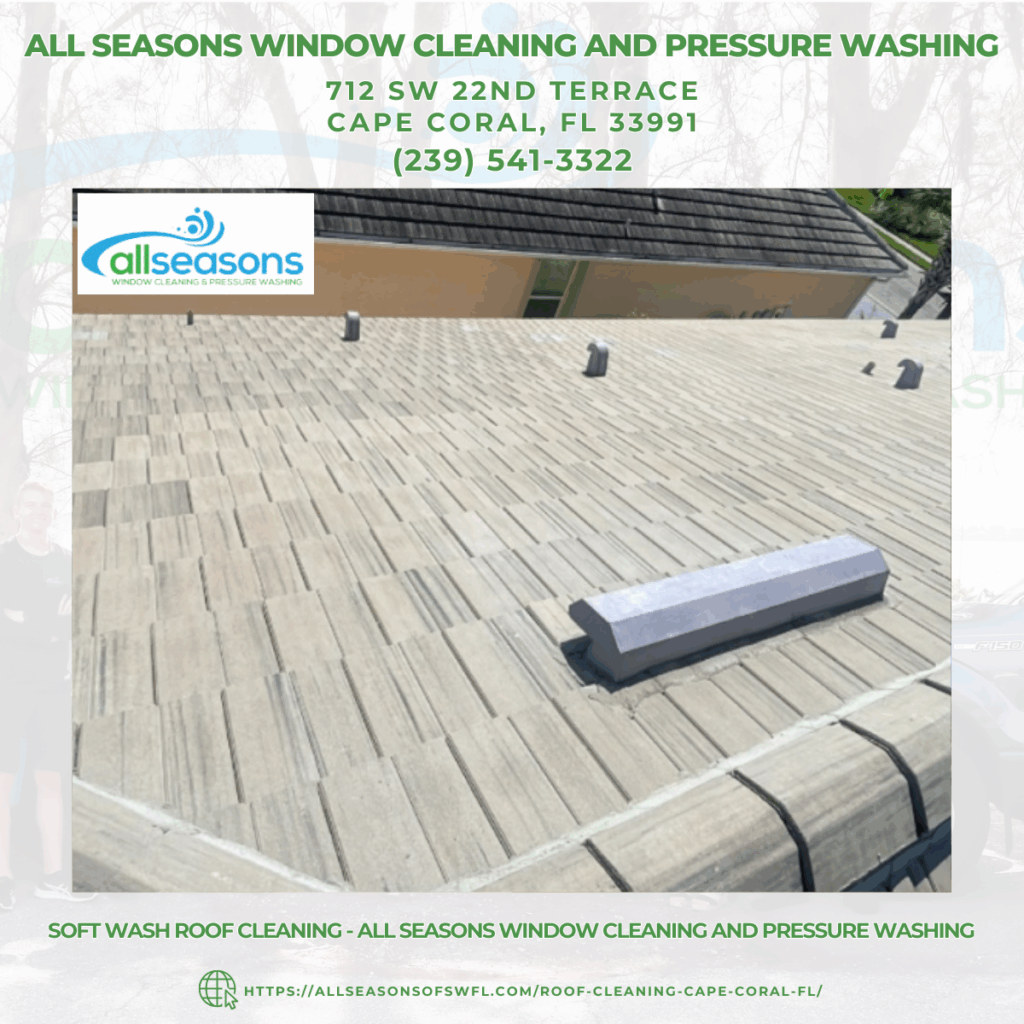
Soft Wash Roof Cleaning - All Seasons Window Cleaning and Pressure Washing
Benefits of Soft Wash Roof Cleaning
Maintaining your roof’s condition directly impacts your home’s value, energy efficiency, and structural integrity. Florida homeowners understand the constant battle against organic growth that thrives in our subtropical climate. Black streaks, green moss, and brown stains don’t just look unappealing—they actively damage roofing materials and can reduce your home’s energy efficiency by up to 30 percent. Soft wash roof cleaning offers a solution that addresses these problems without the risks associated with high-pressure cleaning methods. This approach protects your warranty, extends your roof’s service life, and restores your home’s curb appeal simultaneously. Safe roof washing methods ensure that while contaminants are eliminated, the protective layers of your roofing materials remain intact and functional.
What Is Soft Wash Roof Cleaning?
The soft wash method represents a significant advancement in exterior cleaning technology, specifically designed to address the limitations of traditional cleaning approaches. This technique combines specially formulated, biodegradable cleaning solutions with low-pressure application equipment to achieve superior results. The cleaning agents used are surfactant-based, meaning they reduce surface tension and allow deeper penetration into porous materials where contaminants hide. These solutions are pH-balanced to be tough on organic growth while remaining gentle on roofing materials, painted surfaces, and surrounding vegetation. The low-pressure application, typically ranging from 60 to 500 PSI, provides just enough force to ensure even coverage without causing material damage.
Vs Traditional Pressure Washing
Understanding the fundamental difference between these methods helps homeowners make informed decisions about roof maintenance. Traditional pressure washing relies almost entirely on mechanical force, using water pressure between 2,000 and 4,000 PSI to physically blast away dirt, stains, and organic growth. While this approach works well for concrete driveways and sidewalks, it’s far too aggressive for roofing materials. The intense water pressure strips protective granules from asphalt shingles, these granules shield the underlying asphalt from UV degradation and weather damage. Once removed, shingles deteriorate rapidly, often requiring replacement years ahead of schedule. Soft wash roof cleaning takes the opposite approach, using chemical action to dissolve and eliminate contaminants. The cleaning solution kills algae, mold, and mildew at the cellular level, preventing regrowth for extended periods. This method achieves deeper, longer-lasting cleaning while preserving the roofing material’s integrity and protective features.
Common Roof Issues It Solves
Roofs face numerous challenges in Florida’s demanding environment. The combination of heat, humidity, and frequent rainfall creates conditions where various organisms flourish. Recognizing these common problems helps homeowners understand when professional intervention becomes necessary to prevent permanent damage.
Algae and Black Streaks
The most visible roof problem Florida homeowners encounter is the appearance of black streaks, technically caused by Gloeocapsa magma algae. This organism colonizes asphalt shingles because they contain limestone, which serves as a food source. As the algae population grows, it forms dark protective layers that create the characteristic streaking pattern. Beyond aesthetics, this growth retains moisture against the shingle surface, accelerating decomposition and significantly shortening roof lifespan. The algae also absorbs solar heat rather than reflecting it, which increases attic temperatures and forces air conditioning systems to work harder, raising energy costs. Mold and mildew present additional concerns, particularly in shaded areas and on north-facing roof sections. These fungi penetrate deeper into roofing materials than algae, causing structural damage that compromises waterproofing. In humid areas like Southwest Florida, these organisms can establish colonies within months of a professional cleaning if conditions are favorable. Remove roof algae and black streaks roof treatments become essential maintenance tasks rather than optional cosmetic improvements.
Our Soft Wash Process Step-by-Step
Professional roof cleaning follows a methodical process designed to maximize effectiveness while minimizing risk to your property. Each step serves a specific purpose in ensuring thorough cleaning and protection. The structured approach guarantees consistent results regardless of roof type or contamination severity.
Inspection and Application
The process begins with a detailed roof inspection conducted from both ground level and, when safe, from the roof surface itself. Technicians document the roofing material type, overall condition, degree of contamination, and any existing damage that requires attention. This inspection identifies potential problem areas such as loose flashing, damaged shingles, or areas where water might penetrate during cleaning. Before any cleaning begins, the property perimeter receives preparation including covering delicate plants, pre-wetting vegetation, and protecting outdoor furniture and decorative elements. The soft wash roof cleaning solution is then custom-mixed based on the specific contaminants present and the roofing material being treated. Application begins at the roof’s highest point, working downward to ensure complete coverage. The solution is allowed adequate dwell time, typically 15-30 minutes depending on contamination severity, during which it actively breaks down organic matter. The rinse phase uses low-pressure water to remove all cleaning residue and loosened contaminants. A final inspection confirms complete cleaning and identifies any areas requiring additional attention. The soft wash roof process concludes with a post-treatment vegetation rinse that removes any cleaning solution residue from landscaping.
Roof Types We Service
Florida homes feature diverse roofing materials, each with unique characteristics and cleaning requirements. Professional soft wash services accommodate this variety, adjusting techniques and solutions to suit each material type. Understanding these differences ensures your specific roof receives appropriate treatment.
Shingles and Tile Roofs
Asphalt composition shingles dominate Florida’s residential roofing market due to their cost-effectiveness and decent hurricane resistance. These shingles feature a fiberglass or organic mat base coated with asphalt and topped with ceramic granules. The granules provide color, UV protection, and fire resistance. Shingle roof soft wash treatments gently remove contaminants while preserving these essential granules. The results are remarkable—heavily stained roofs often look nearly new after treatment, and the cleaning extends shingle life by years. Architectural shingles, which are thicker and more textured than traditional three-tab shingles, respond especially well to soft washing since their dimensional design can trap more organic growth. Tile roofing, whether traditional clay, modern concrete, or synthetic alternatives, requires different considerations. Tiles are inherently porous, allowing algae and mold to penetrate beneath the surface where pressure washing cannot reach. Soft wash solutions penetrate these pores, eliminating contaminants thoroughly. The gentle process also preserves the tile’s finish, whether glazed, painted, or natural, preventing the dulling and etching that high-pressure water causes.
Cleaning Frequency Recommendations
Establishing an appropriate maintenance schedule protects your investment and prevents minor contamination from becoming major problems. Several factors influence how often roof cleaning should occur, including environmental conditions, roof characteristics, and previous maintenance history. Florida’s challenging climate generally requires more frequent attention than most regions.
Homes in typical suburban settings with moderate tree coverage benefit from professional cleaning every two to three years. This frequency prevents heavy contamination buildup while remaining cost-effective. Properties with extensive tree coverage, particularly oak trees that promote moss growth, may require annual treatments to maintain optimal condition. Coastal properties face additional challenges from salt air and higher humidity levels, often necessitating cleaning every 18-24 months. North-facing roof sections and shaded areas develop contamination faster than sunny, south-facing sections, sometimes requiring spot treatments between full-roof cleanings. New roofs in Florida typically show first signs of algae growth within two to three years of installation. Addressing contamination early prevents deep staining that becomes progressively harder to remove. Regular maintenance also allows professionals to identify and document minor roof damage before it escalates into expensive repairs. The cumulative cost of periodic cleaning represents a fraction of premature roof replacement expenses.
Why Choose Professional Soft Wash
The decision between DIY roof cleaning and professional roof cleaning significantly impacts both results and safety. While the appeal of saving money is understandable, the reality of roof cleaning involves complexities that most homeowners underestimate. Professional technicians bring expertise that extends beyond simply spraying cleaning solution on your roof.
Chemistry knowledge is fundamental to effective soft washing. Different contaminants require different treatment approaches, and various roofing materials tolerate different solution strengths. Professionals understand these variables and adjust accordingly. Using incorrect solution concentrations either fails to clean effectively or risks damaging roofing materials and landscaping. Equipment quality also matters significantly. Professional-grade soft wash systems deliver consistent, adjustable pressure and ensure even chemical distribution. Consumer-grade equipment often lacks these capabilities, leading to uneven cleaning and potential damage. Safety considerations cannot be overstated. According to the Consumer Product Safety Commission, ladder-related injuries send hundreds of thousands of Americans to emergency rooms annually. Roof work adds complexity beyond simple ladder use, requiring proper fall protection, appropriate footwear, and understanding of how to navigate different roof pitches safely. Professionals carry comprehensive liability insurance and workers’ compensation coverage, protecting homeowners from financial responsibility if accidents occur. Additionally, reputable companies guarantee their work, offering warranties that typically cover retreatment if organic growth returns within one to two years.
Free Soft Wash Roof Quote
Beginning your roof restoration journey requires just one simple step—requesting a professional evaluation. Soft wash roof cleaning services throughout Southwest Florida offer free, detailed roof cleaning quotes that provide accurate pricing without obligation. The quote process typically begins with a brief conversation about your property, during which you’ll describe your roof type, approximate size, and visible contamination levels.
Many companies offer multiple quote options for convenience. Phone consultations allow immediate discussion and often provide ballpark estimates for standard properties. Online quote request forms let you submit information at your convenience, with responses typically provided within one business day. In-person assessments offer the most accurate quotes, as technicians can evaluate factors like roof pitch, accessibility, and contamination severity firsthand. These on-site quotes usually occur within a few days of your initial contact. Service areas for professional soft wash providers generally encompass all of Lee County, including Cape Coral, Fort Myers, Lehigh Acres, and Bonita Springs, plus Collier County communities like Naples, Marco Island, and Estero, and Charlotte County areas including Punta Gorda and Port Charlotte. When requesting your quote, prepare information about your home’s age, roof material, square footage, and whether you’ve had previous professional roof cleaning. Photographs of problem areas can be helpful for remote assessments. Most importantly, don’t delay addressing roof contamination. What starts as a minor aesthetic issue progressively worsens, eventually causing permanent staining and material damage that no amount of cleaning can reverse.
