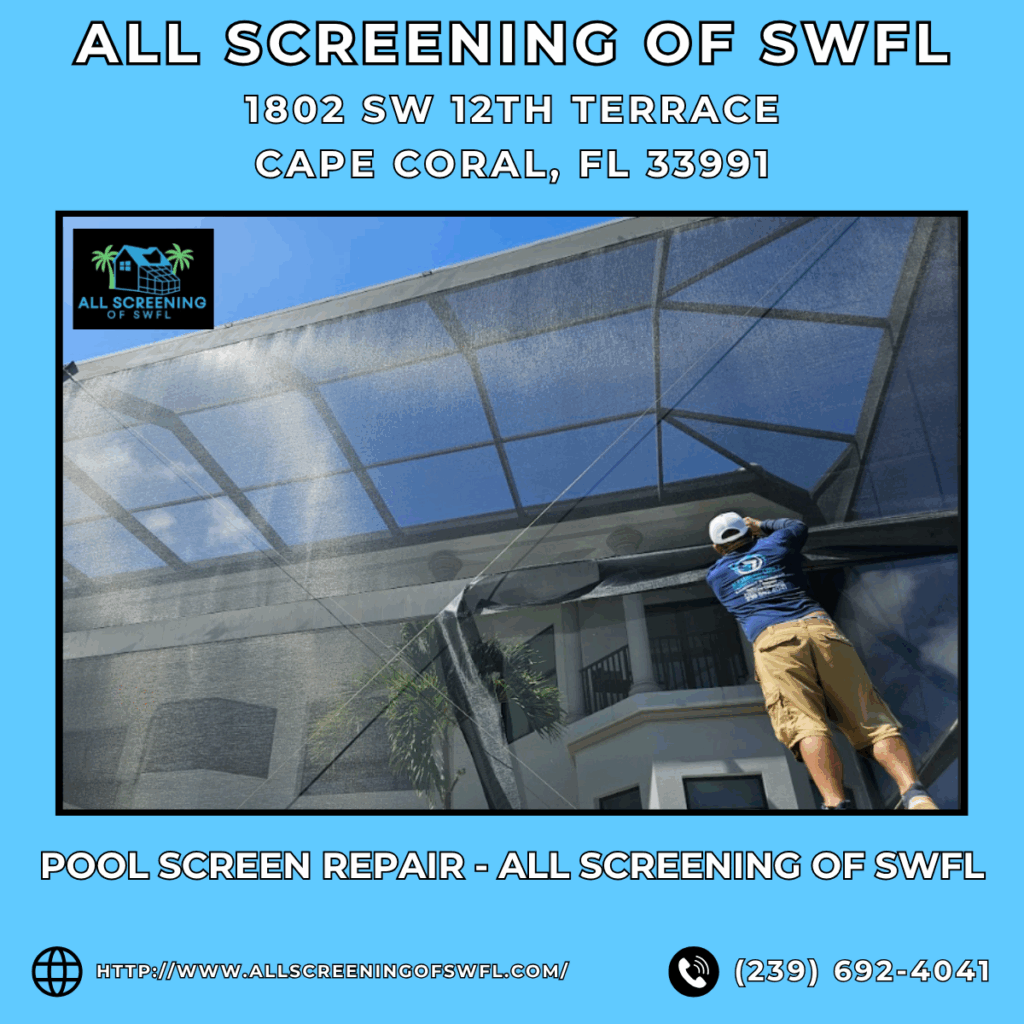
Pool Screen Repair - All Screening of SWFL
Why Pool Screen Repair Is Essential
Pool enclosures create a comfortable outdoor environment where families can relax without the constant battle against insects and debris. When these protective screens sustain damage, the entire purpose of the enclosure becomes compromised. Addressing tears, holes, and weathering promptly through professional repair maintains your investment and ensures continued enjoyment of your outdoor living space.
The consequences of neglecting screen damage extend beyond mere inconvenience. Mosquitoes, flies, and other pests quickly discover even small openings, transforming your poolside retreat into an uncomfortable space. Leaves, seeds, and dirt blow through damaged sections, creating constant cleaning headaches. Additionally, deteriorated screens can detach during storms, potentially causing injury or additional property damage.
Investment protection represents another critical reason for timely repairs. Pool enclosures add significant value to properties, particularly in warm climates where outdoor living is cherished. Maintaining screens in excellent condition preserves this value while preventing the need for premature full replacement. Professional pool screen repair services offer cost-effective solutions that keep your enclosure functional and attractive without breaking the budget.
Pool Screen Repair Services Offered
Comprehensive screen enclosure repair services address every aspect of enclosure maintenance and restoration. Professionals handle everything from replacing individual panels to complete cage rescreening projects. Their expertise covers pool cages, lanai enclosures, patios, porches, and any other screened structure requiring attention.
Lanai screen replacement has evolved significantly with advances in screening technology. Modern materials offer superior strength, better visibility, and enhanced resistance to environmental degradation. Professional installers stay current with these innovations, providing clients with options that deliver better performance than original installations. Whether you need standard screening or specialized materials for high-traffic areas, expert services ensure proper selection and installation.
Beyond basic screen replacement, professionals offer frame straightening, structural reinforcement, and custom modifications. They can upgrade door systems, add panels for improved functionality, or reconfigure existing layouts to better suit your needs. This comprehensive approach ensures your enclosure not only looks great but functions optimally for years to come.
Screen Patch vs Full Rescreen—Which Is Right?
Choosing between patching and rescreening requires careful evaluation of your enclosure’s condition. Small, isolated damage in otherwise healthy screens makes patching an attractive option. This approach proves most effective for recent tears or punctures where surrounding material remains strong and intact. Patches can be nearly invisible when professionally applied, restoring function without the expense of complete replacement.
Conversely, extensive damage or aging screens warrant full rescreening consideration. Multiple tears, widespread discoloration, or screens that have become brittle indicate materials nearing the end of their service life. Continuing to patch deteriorating screens becomes economically impractical compared to comprehensive pool screen repair through rescreening.
Material upgrades often tip the decision toward full rescreening. If your current screens use dated materials with poor UV resistance or visibility, replacing them with modern alternatives significantly improves your enclosure’s performance. Professional assessment provides clarity on the most cost-effective approach based on your specific circumstances, damage severity, and long-term goals.
Common Causes of Screen Damage
Environmental factors dominate the list of screen replacement causes. Intense ultraviolet radiation gradually breaks down screening materials, causing brittleness and discoloration. This process accelerates in regions with year-round sun exposure, making UV-resistant materials essential for longevity. Wind-driven debris during storms creates immediate damage, while consistent exposure to salt air in coastal areas accelerates corrosion and deterioration.
Animal activity creates surprisingly frequent pool enclosure tears. Cats climbing screens, dogs pawing at them to gain access, and even birds landing heavily can compromise screen integrity. Wildlife such as squirrels or raccoons may scratch or bite screens while attempting entry. Installing heavier-gauge or pet-resistant screening in vulnerable areas helps mitigate this damage.
Human factors also contribute significantly to screen damage. Furniture moving, improper cleaning techniques using high-pressure washers, and recreational equipment striking screens cause avoidable tears. Children playing near enclosures may accidentally throw toys or balls into screens. Simply aging materials naturally lose strength and elasticity, becoming increasingly vulnerable to all types of damage regardless of external factors.
DIY vs. Professional Repairs
The appeal of DIY screen repairs lies primarily in perceived cost savings. For extremely small tears in recently installed screens, homeowners with proper tools might achieve acceptable temporary results. However, most DIY attempts lack the professional quality that ensures longevity. Achieving correct screen tension requires experience and specialized tools, without which screens sag prematurely or pull loose.
Professional repairs deliver superior results through expert techniques and quality materials. Trained technicians understand proper spline installation, frame preparation, and tensioning methods that ensure screens remain taut and secure for years. They source commercial-grade materials unavailable to most homeowners, providing better durability and appearance. Professional work also comes with warranties protecting your investment against defects or premature failure.
Safety concerns make professional service particularly important for tall enclosures or complex structural repairs. Working at height requires proper equipment and training to prevent injuries. Professionals carry comprehensive insurance protecting homeowners from liability. The combination of superior results, warranty protection, and safety considerations makes professional pool screen repair the prudent choice for most situations.
How Our Screen Repair Process Works
Professional screen repair begins with detailed inspection and damage assessment. Technicians examine the entire enclosure systematically, documenting all issues from obvious tears to subtle frame damage or spline deterioration. This thorough approach ensures nothing gets overlooked that might cause problems later. Structural integrity receives particular attention, as frame issues must be addressed before new screening can be properly installed.
Material selection follows assessment, with professionals explaining options suited to your specific needs. Factors including local climate, pet presence, desired visibility, and budget all influence material choice. Technicians provide samples and detailed explanations of each option’s advantages, empowering you to make informed decisions. Transparent quotes outline all costs upfront, eliminating surprise charges.
Installation proceeds efficiently using professional equipment and techniques. Teams work systematically to minimize disruption while maintaining exacting quality standards. They ensure proper screen tension throughout, secure splines correctly, and clean up thoroughly upon completion. The finished product restores your enclosure’s functionality and appearance, backed by warranty protection and professional pride in workmanship.
How to Maintain Pool Screens After Repair
Establishing regular maintenance routines dramatically extends screen life following repair. Gentle cleaning every few months prevents accumulation of corrosive substances and organic materials. Mix mild dish soap with water, apply with a soft brush or cloth, and rinse thoroughly. Avoid abrasive cleaners, stiff brushes, or pressure washers that can damage screening material. This simple practice keeps screens looking new while preventing premature deterioration.
Systematic inspections catch developing problems before they require major repairs. Walk around your enclosure monthly, examining screens carefully for small tears, loose splines, or areas showing strain. Pay special attention to high-impact zones near doors, walkways, or where pets frequently interact with screens. After severe weather, conduct thorough inspections to identify and address storm damage promptly.
Preventive measures reduce the likelihood of damage occurring. Keep landscaping trimmed back from screens to prevent abrasion from branches. Educate family members about avoiding screen contact during activities. Consider applying UV-protective coatings in areas receiving intense sun exposure. Store pool equipment properly to prevent accidental impacts. These proactive steps, combined with professional maintenance when needed, ensure maximum screen longevity and continued outdoor comfort.
