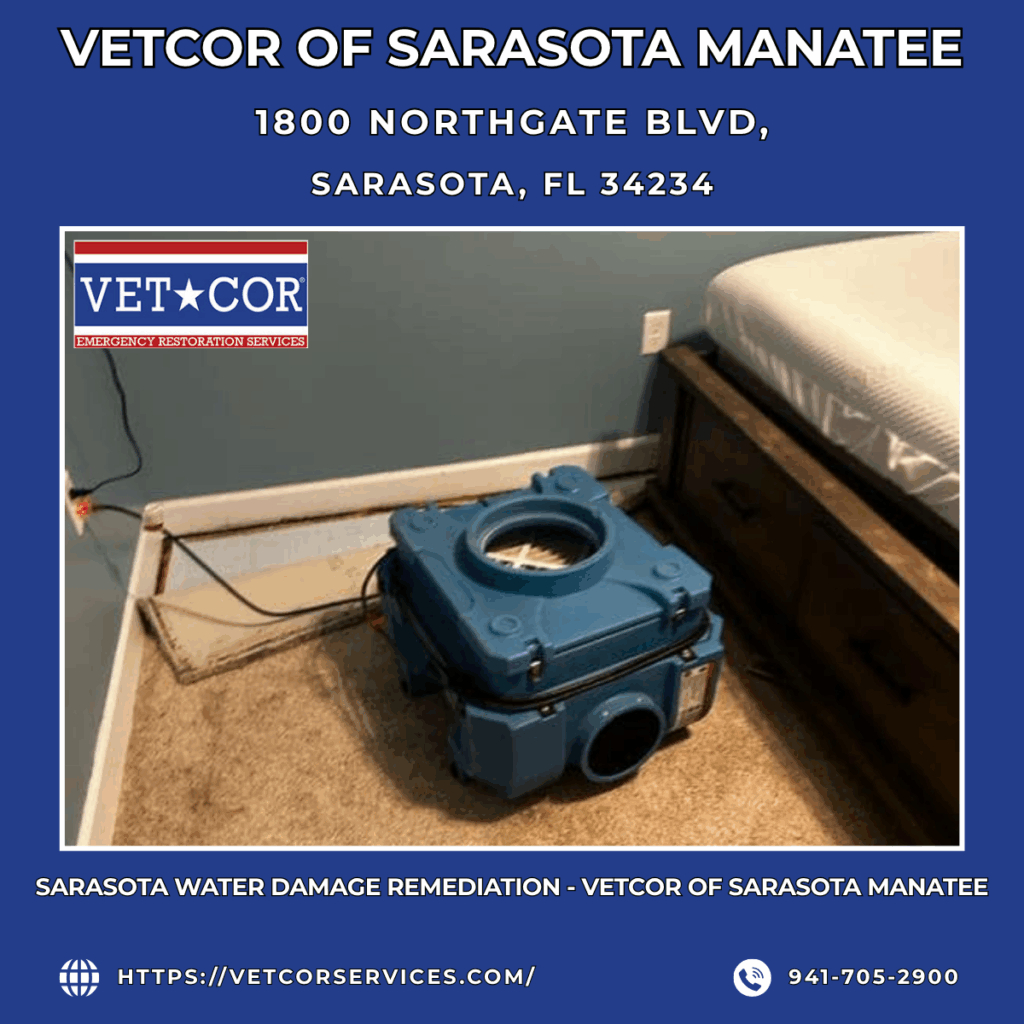
Sarasota Water Damage Remediation - VetCor of Sarasota Manatee
Water damage emergencies require immediate professional attention to minimize long-term consequences. In Sarasota’s humid climate, the window for effective intervention is particularly narrow. Every hour of delay allows moisture to penetrate deeper into building materials, increasing restoration costs and the likelihood of permanent damage. Property owners who respond quickly by engaging certified Sarasota Water Damage Remediation professionals protect their investments and reduce overall recovery time.
The Gulf Coast location brings additional challenges including salt water exposure during storm events. Salt water is particularly corrosive to building materials, mechanical systems, and metal fixtures. It requires specialized cleaning procedures and often necessitates replacement of affected components that cannot be adequately restored. Professional remediation teams understand these regional challenges and apply appropriate techniques to address salt water contamination effectively.
Hurricane season presents the most significant water damage risk for Sarasota properties. Storm surge and wind-driven rain can cause catastrophic flooding that affects entire communities simultaneously. During these events, professional remediation services become overwhelmed with demand, making it difficult to schedule timely response. Property owners who establish relationships with reputable remediation companies before emergencies occur often receive priority service when disasters strike, minimizing damage and accelerating recovery.
Advanced inspection techniques provide comprehensive damage assessment beyond surface observations. Thermal imaging reveals moisture patterns that indicate the full extent of water migration through building assemblies. These patterns help technicians understand how water entered the structure and where it has traveled, ensuring all affected areas receive appropriate treatment. Missing hidden moisture during initial assessment leads to recurring problems that require additional remediation cycles.
Structural and Content Damage Assessment
Building materials respond differently to water exposure based on their composition and density. Porous materials like drywall and insulation absorb water rapidly and retain moisture longer, often requiring replacement rather than drying. Semi-porous materials such as wood can frequently be salvaged through controlled drying if intervention occurs quickly. Non-porous materials like metal and glass typically withstand water exposure but may require cleaning to remove contaminants and prevent corrosion.
Structural assessment identifies safety hazards that require immediate attention before remediation proceeds. Water-saturated materials become significantly heavier, potentially overloading floor systems and ceiling joists. Electrical components exposed to water present shock and fire hazards until properly inspected and dried. Gas lines damaged by flooding or structural movement can create dangerous situations. Professional Sarasota Water Damage Remediation technicians coordinate with appropriate specialists to address these safety concerns before beginning restoration work.
Content restoration requires specialized knowledge of materials and cleaning techniques. Upholstered furniture, mattresses, and carpeting often harbor contaminants and retain moisture that promotes microbial growth. Professional assessment determines whether these items can be effectively sanitized or require replacement. Electronics exposed to water need careful evaluation by specialized technicians to determine restoration potential. Documents and photographs may be salvageable through freeze-drying and other advanced restoration techniques.
Moisture Detection Techniques
Comprehensive moisture mapping creates a baseline for monitoring the drying process. Technicians measure and record moisture levels throughout affected areas, creating detailed diagrams that show concentration patterns. These maps guide equipment placement and help identify areas requiring special attention. Regular remeasuring during the drying process provides objective evidence of progress and helps determine when materials have achieved acceptable dryness levels.
Infrared thermography provides non-invasive moisture detection that dramatically reduces the need for exploratory demolition. These cameras detect temperature differences caused by evaporative cooling where moisture is present. They can identify wet insulation within walls, roof leaks, and plumbing leaks without requiring removal of finished surfaces. This technology reduces restoration costs by limiting demolition to areas that actually require repair.
Professional Drying and Dehumidification
The science of psychrometrics governs effective structural drying. This field studies the relationship between air temperature, humidity, and vapor pressure. Professional remediation technicians apply psychrometric principles to create optimal drying conditions that accelerate moisture removal while preventing secondary damage. They adjust temperature and humidity levels strategically throughout the drying process, maximizing efficiency and ensuring complete moisture removal.
Containment strategies focus drying efforts on affected areas while protecting unaffected portions of the property. Temporary barriers seal off work zones, allowing remediation teams to create aggressive drying conditions without impacting occupied spaces. This approach reduces energy costs, minimizes disruption to occupants, and accelerates the drying timeline. Negative air pressure within containment areas prevents moisture and airborne contaminants from spreading to clean areas.
Specialized drying techniques address unique situations such as hardwood floors, structural cavities, and concrete slabs. Hardwood floor drying systems extract moisture through the surface or from below using vacuum pressure and heat. Wall cavity drying requires strategic holes to introduce air movement within confined spaces. Concrete drying often requires extended timeframes and specialized equipment due to the material’s density and low permeability.
Repair and Restoration Process
Antimicrobial treatment prevents mold growth on cleaned and dried surfaces. Professional-grade fungicides and disinfectants eliminate existing microbial contamination and provide residual protection during the restoration phase. These treatments address both surface contamination and materials that have been affected but not removed. Proper application techniques ensure adequate coverage without creating health risks for occupants.
Reconstruction following water damage provides opportunities to incorporate improvements that enhance property value and resilience. Upgraded materials such as mold-resistant drywall, waterproof luxury vinyl flooring, and enhanced insulation provide better performance than original components. Modern plumbing fixtures, improved drainage systems, and updated electrical service add functionality while reducing future failure risks. Working with experienced Sarasota Water Damage Remediation contractors ensures these upgrades integrate seamlessly with restoration work.
Quality control throughout the restoration process ensures all work meets industry standards and local building codes. Reputable remediation companies employ skilled craftsmen who take pride in their work and understand the importance of details. They conduct thorough inspections at each phase of the project, addressing issues immediately rather than discovering problems after project completion. This attention to quality results in restorations that not only look excellent but also provide long-term performance and durability.
Supporting Insurance Claims
Understanding policy coverage helps property owners maximize insurance benefits. Most homeowners’ policies cover sudden and accidental water damage but exclude damage from lack of maintenance or gradual leaks. Flood insurance through the National Flood Insurance Program covers rising water from storms but requires separate policies. Knowing these distinctions helps property owners understand what damages their policies will cover and prevents surprises during the claims process.
Timely claim filing is essential for securing coverage. Most policies require notification within specific timeframes after discovering damage. Delays in reporting can result in claim denials based on policy provisions. Professional remediation companies help property owners navigate notification requirements and ensure all deadlines are met. They provide emergency stabilization services while claims are being processed, preventing additional damage that could complicate insurance settlements.
Detailed estimates prepared by remediation professionals provide insurance adjusters with clear information needed for claim evaluation. These estimates itemize all necessary services, materials, and labor costs using industry-standard pricing databases. They include supporting documentation such as photographs, moisture readings, and damage assessments. This comprehensive approach facilitates accurate claim valuation and reduces the likelihood of disputes over coverage amounts. Many Sarasota Water Damage Remediation companies have established relationships with insurance carriers and understand their specific documentation requirements, streamlining the approval process.
